50 cm
Washing with the motor running
Cleaners on paint — not too aggressive
Display with damp cloth — no direct spray
Hosing cable connections from the side
✕ Avoid
High-pressure directly on motor & battery
Direct spray on open charging port
Brush car wash for two-wheelers
Washing during charging process
Steam cleaner on electrical components
Solvent-based cleaners on seals
Car Wash: Which one is suitable?
Not every car wash is the same — and not every one is suitable for two-wheelers. However, this has less to do with electronics than with the mechanics of the system itself.
Touchless Gantry Car Wash — suitable
Water and foam are applied by nozzles without physical contact. No brush contact, no rotating mechanics. For e-choppers and cabin scooters, this is the best choice in a car wash — as long as the charging port is closed and no direct spray is aimed at the motor.
Brush Car Wash — not recommended
Rotating brushes are generally unsuitable for two-wheelers — regardless of whether they are electric or gasoline-powered. The brushes can damage or tear off mirrors, handlebars, indicator lenses, and fairings. Not an electrical problem, but a mechanical one.
Self-Service Wash Bay (Self-Wash Station) — best option
Self-service wash bays with foam sprayers and high-pressure lances give you full control. You choose the pressure, angle, and distance yourself. With normal pressure and 30-40 cm distance for sensitive areas: ideal. You can wash selectively without hitting delicate spots.
Cabin Scooters — Special Features
The SEVION SK3 and other cabin scooters benefit from the enclosed cabin. The interior is completely separated from the wash water. On the outside, the cabin scooter can be washed like a small vehicle — body, windows, rims without problems. Do not spray directly into ventilation slots.
Washing Correctly: Step by Step
If you want to wash your vehicle yourself, it's best to follow this order — whether it's an e-chopper, e-scooter, or cabin scooter:
1
Turn off the motor, check the charging port
Before washing, turn off the motor, close the charging port cover and check if it's tight. Never wash during charging — water and open contacts don't mix.
2
Pre-soak coarse dirt
Briefly pre-soak mud, insects, and road grime with water — then they'll loosen without mechanical pressure. Rubbing off dry dirt directly will scratch the paint.
3
Wash frame, fairing, and rims
With motorcycle shampoo or mild car shampoo and a sponge or wash mitt. Use a normal hose or a self-service wash bay with distance. Wipe in circles, don't scrub. Clean rims separately with rim cleaner.
4
Engine and battery area: with distance and from the side
Rinse the engine area and battery compartment from the side and from a distance of 40–50 cm — no direct jet, no high pressure. Water is allowed to flow over it, not to be forced into it. The IP protection class of the vehicles is designed for splash water, not for pressurized water.
5
Display and cockpit: no direct jet
Wipe the display with a damp microfiber cloth — do not spray water directly on it. Also, only wipe buttons and controls with a damp cloth, do not spray them. Completely avoid connectors and plugs.
6
Dry off and let air dry briefly
Wipe large surfaces with a microfiber cloth. Then let the vehicle air dry briefly before restarting the engine — so that residual water in cavities can drain away. Afterwards, treat the chain or drive with a suitable chain spray.
Note on high-pressure cleaners: Many people use Kärcher or similar devices — this is generally possible, but only with sufficient distance (min. 40 cm) and without a direct jet on electrical components, cables, seals, and connections. The pressure itself is less of a problem than a direct, targeted jet on unprotected areas.
Does this apply to all Star-Biker vehicles?
Yes — all Star-Biker vehicles are approved for road use and are therefore designed for splash water, rain, and normal washing. The basic rules mentioned above apply to the entire range:
E-Chopper & Bobber
Chopper M1P Custom, Bobber M8S Custom, among others
Fairing and frame can be sprayed off without problems. Display and charging port with caution — avoid direct jet.
Cabin Scooter
SEVION SK3, SEVION Cabin Scooter
Body can be washed like a small vehicle. Do not spray directly on ventilation slots and door seals. Interior remains protected.
Frequently asked questions about washing
Can I take my e-chopper to a car wash?
Touchless car washes are suitable for e-choppers, provided the charging port is closed and no direct jet is aimed at the motor or electronics. Brush car washes are unsuitable for all two-wheelers — regardless of the drive type — because rotating brushes can damage mechanical parts.
Can I use a high-pressure cleaner?
Yes, with distance. Min. 40 cm distance, no direct jet on motor, battery, charging port, display or cable connectors. Frame, fairing, rims and tires can be cleaned without problems with a high-pressure cleaner.
What happens if water gets into the electronics?
All road-legal electric vehicles are designed for splash water — this is a prerequisite for EU approval. Normal rain, puddles, and splash water during washing are not a problem. It becomes problematic if water is forced under pressure into unprotected openings — open charging ports, unprotected plugs, or seals damaged by solvent-based cleaners.
Which cleaning agent should I use?
Motorcycle shampoo or mild car shampoo for paint and fairing. Rim cleaner for the wheels. Dry microfiber cloth for display and cockpit. No solvent-based cleaners on seals, rubber parts or plastic fairings — this will damage the material.
How often should an e-vehicle be washed?
As needed — more often after driving on wet or salty roads (winter), as road salt attacks the frame. In summer, every 2–4 weeks is sufficient, depending on use. After winter, a thorough cleaning of the frame and all plug connections is recommended.
Does this also apply to the SEVION cabin scooter?
Yes, but with an advantage: The enclosed cabin fully protects the interior. The exterior body can be washed like a small vehicle — hose, foam, cloth. Do not spray directly on ventilation slots and door seals. The interior remains dry during washing.
Conclusion
Washing yes — with the right distance and some common sense.
E-choppers, e-scooters, and cabin scooters are not made of glass. They are built for road traffic — and therefore also for rain, puddles, and normal washing. Hoses, self-service car washes, and touchless car washes are not a problem. High pressure directly on electronics and open connections, however, is. Those who observe this will enjoy a clean vehicle for a long time.
View all vehicles → 35+ modelsEU road approval included
All Vehicles
E-choppers, e-scooters, cabin scooters & more — 35+ models, 25–125 km/h
Shipping from €29
Forwarding agent directly to your doorstep — 3–5 working days to Germany
Personal Consultation
Which model suits you? We help — free and without pressure.
">
50 cm
Washing with the motor running
Cleaners on paint — not too aggressive
Display with damp cloth — no direct spray
Hosing cable connections from the side
✕ Avoid
High-pressure directly on motor & battery
Direct spray on open charging port
Brush car wash for two-wheelers
Washing during charging process
Steam cleaner on electrical components
Solvent-based cleaners on seals
Car Wash: Which one is suitable?
Not every car wash is the same — and not every one is suitable for two-wheelers. However, this has less to do with electronics than with the mechanics of the system itself.
Touchless Gantry Car Wash — suitable
Water and foam are applied by nozzles without physical contact. No brush contact, no rotating mechanics. For e-choppers and cabin scooters, this is the best choice in a car wash — as long as the charging port is closed and no direct spray is aimed at the motor.
Brush Car Wash — not recommended
Rotating brushes are generally unsuitable for two-wheelers — regardless of whether they are electric or gasoline-powered. The brushes can damage or tear off mirrors, handlebars, indicator lenses, and fairings. Not an electrical problem, but a mechanical one.
Self-Service Wash Bay (Self-Wash Station) — best option
Self-service wash bays with foam sprayers and high-pressure lances give you full control. You choose the pressure, angle, and distance yourself. With normal pressure and 30-40 cm distance for sensitive areas: ideal. You can wash selectively without hitting delicate spots.
Cabin Scooters — Special Features
The SEVION SK3 and other cabin scooters benefit from the enclosed cabin. The interior is completely separated from the wash water. On the outside, the cabin scooter can be washed like a small vehicle — body, windows, rims without problems. Do not spray directly into ventilation slots.
Washing Correctly: Step by Step
If you want to wash your vehicle yourself, it's best to follow this order — whether it's an e-chopper, e-scooter, or cabin scooter:
1
Turn off the motor, check the charging port
Before washing, turn off the motor, close the charging port cover and check if it's tight. Never wash during charging — water and open contacts don't mix.
2
Pre-soak coarse dirt
Briefly pre-soak mud, insects, and road grime with water — then they'll loosen without mechanical pressure. Rubbing off dry dirt directly will scratch the paint.
3
Wash frame, fairing, and rims
With motorcycle shampoo or mild car shampoo and a sponge or wash mitt. Use a normal hose or a self-service wash bay with distance. Wipe in circles, don't scrub. Clean rims separately with rim cleaner.
4
Engine and battery area: with distance and from the side
Rinse the engine area and battery compartment from the side and from a distance of 40–50 cm — no direct jet, no high pressure. Water is allowed to flow over it, not to be forced into it. The IP protection class of the vehicles is designed for splash water, not for pressurized water.
5
Display and cockpit: no direct jet
Wipe the display with a damp microfiber cloth — do not spray water directly on it. Also, only wipe buttons and controls with a damp cloth, do not spray them. Completely avoid connectors and plugs.
6
Dry off and let air dry briefly
Wipe large surfaces with a microfiber cloth. Then let the vehicle air dry briefly before restarting the engine — so that residual water in cavities can drain away. Afterwards, treat the chain or drive with a suitable chain spray.
Note on high-pressure cleaners: Many people use Kärcher or similar devices — this is generally possible, but only with sufficient distance (min. 40 cm) and without a direct jet on electrical components, cables, seals, and connections. The pressure itself is less of a problem than a direct, targeted jet on unprotected areas.
Does this apply to all Star-Biker vehicles?
Yes — all Star-Biker vehicles are approved for road use and are therefore designed for splash water, rain, and normal washing. The basic rules mentioned above apply to the entire range:
E-Chopper & Bobber
Chopper M1P Custom, Bobber M8S Custom, among others
Fairing and frame can be sprayed off without problems. Display and charging port with caution — avoid direct jet.
Cabin Scooter
SEVION SK3, SEVION Cabin Scooter
Body can be washed like a small vehicle. Do not spray directly on ventilation slots and door seals. Interior remains protected.
Frequently asked questions about washing
Can I take my e-chopper to a car wash?
Touchless car washes are suitable for e-choppers, provided the charging port is closed and no direct jet is aimed at the motor or electronics. Brush car washes are unsuitable for all two-wheelers — regardless of the drive type — because rotating brushes can damage mechanical parts.
Can I use a high-pressure cleaner?
Yes, with distance. Min. 40 cm distance, no direct jet on motor, battery, charging port, display or cable connectors. Frame, fairing, rims and tires can be cleaned without problems with a high-pressure cleaner.
What happens if water gets into the electronics?
All road-legal electric vehicles are designed for splash water — this is a prerequisite for EU approval. Normal rain, puddles, and splash water during washing are not a problem. It becomes problematic if water is forced under pressure into unprotected openings — open charging ports, unprotected plugs, or seals damaged by solvent-based cleaners.
Which cleaning agent should I use?
Motorcycle shampoo or mild car shampoo for paint and fairing. Rim cleaner for the wheels. Dry microfiber cloth for display and cockpit. No solvent-based cleaners on seals, rubber parts or plastic fairings — this will damage the material.
How often should an e-vehicle be washed?
As needed — more often after driving on wet or salty roads (winter), as road salt attacks the frame. In summer, every 2–4 weeks is sufficient, depending on use. After winter, a thorough cleaning of the frame and all plug connections is recommended.
Does this also apply to the SEVION cabin scooter?
Yes, but with an advantage: The enclosed cabin fully protects the interior. The exterior body can be washed like a small vehicle — hose, foam, cloth. Do not spray directly on ventilation slots and door seals. The interior remains dry during washing.
Conclusion
Washing yes — with the right distance and some common sense.
E-choppers, e-scooters, and cabin scooters are not made of glass. They are built for road traffic — and therefore also for rain, puddles, and normal washing. Hoses, self-service car washes, and touchless car washes are not a problem. High pressure directly on electronics and open connections, however, is. Those who observe this will enjoy a clean vehicle for a long time.
View all vehicles → 35+ modelsEU road approval included
All Vehicles
E-choppers, e-scooters, cabin scooters & more — 35+ models, 25–125 km/h
Shipping from €29
Forwarding agent directly to your doorstep — 3–5 working days to Germany
Personal Consultation
Which model suits you? We help — free and without pressure.
">
Washing E-Choppers: What's Possible, What's Not — The Honest Guide for Electric Vehicles.
GuideService & Tips
Washing E-Choppers: What's Possible, What's Not — the Honest Guide for Electric Vehicles.
Car wash, garden hose, or high-pressure cleaner — what is really allowed for e-choppers, e-scooters, and cabin scooters? The short answer: more than you think. But there are a few areas where you need to be careful.
Star-Biker Editorial TeamApril 27, 20265 min read
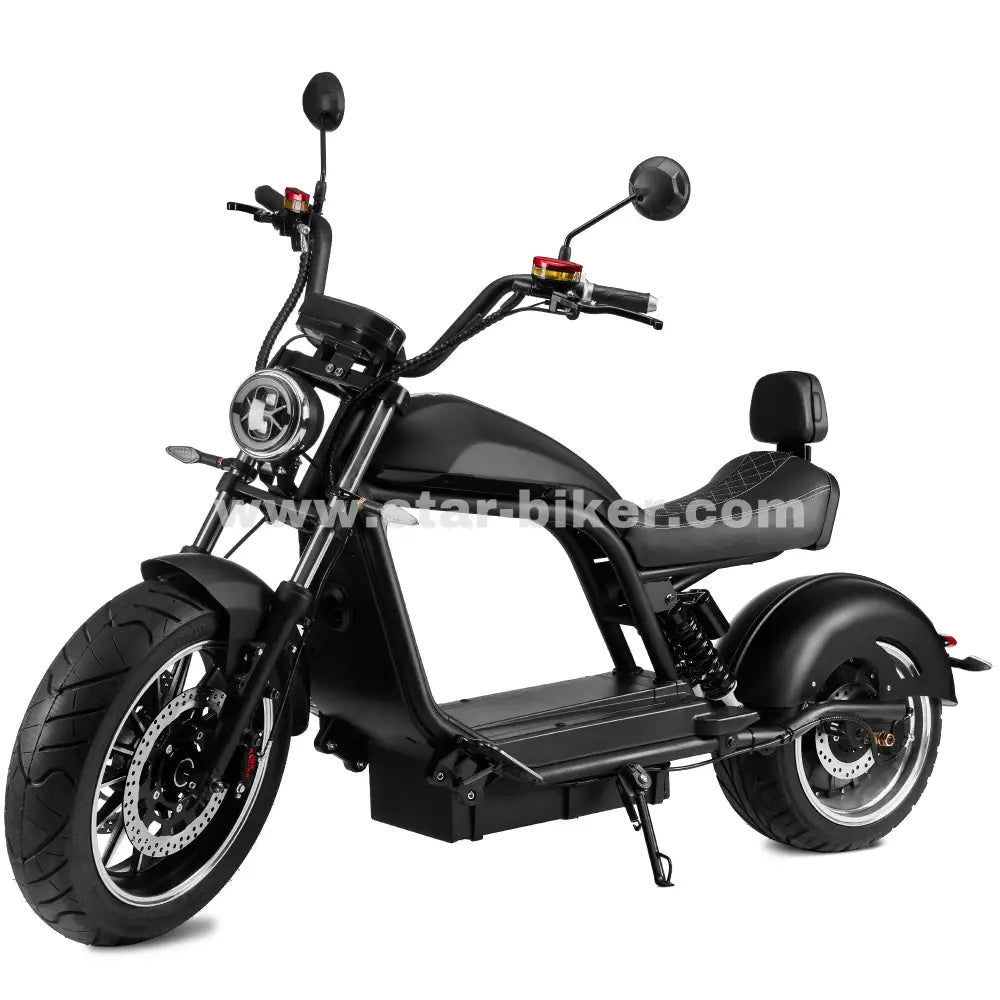
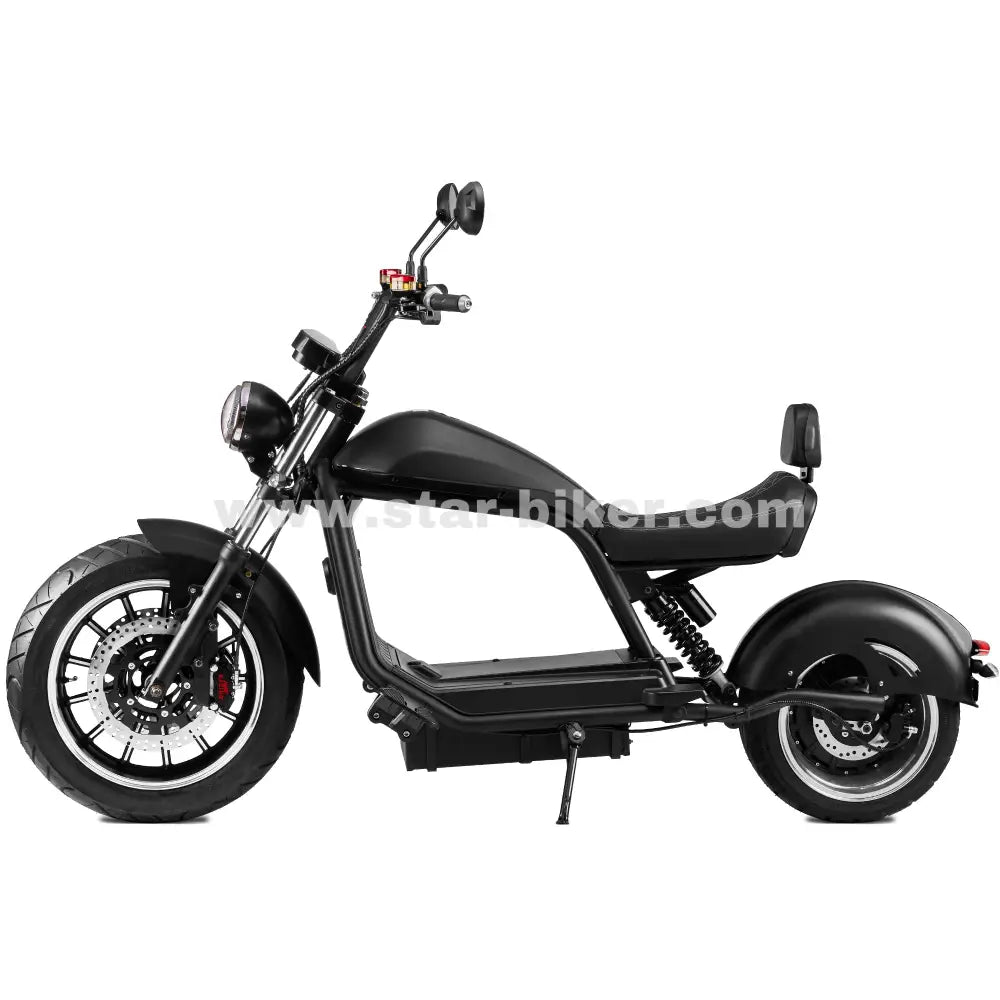
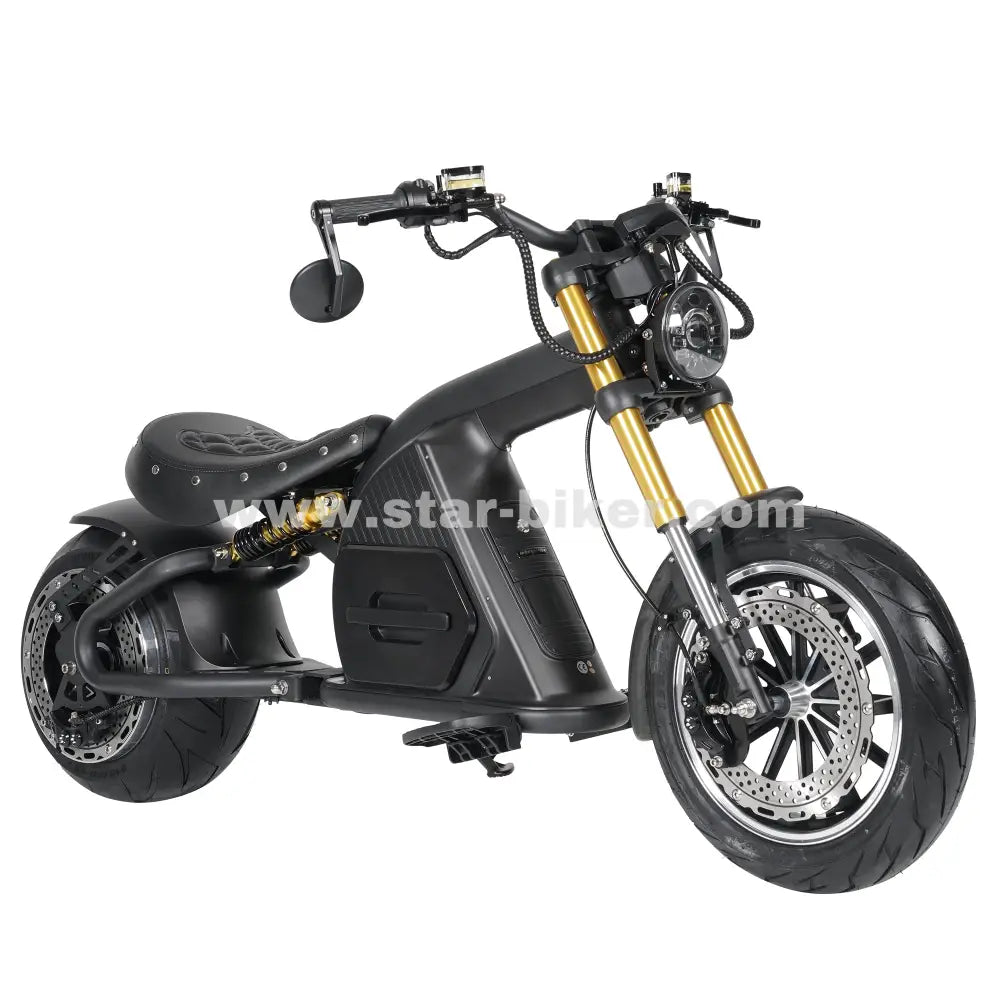
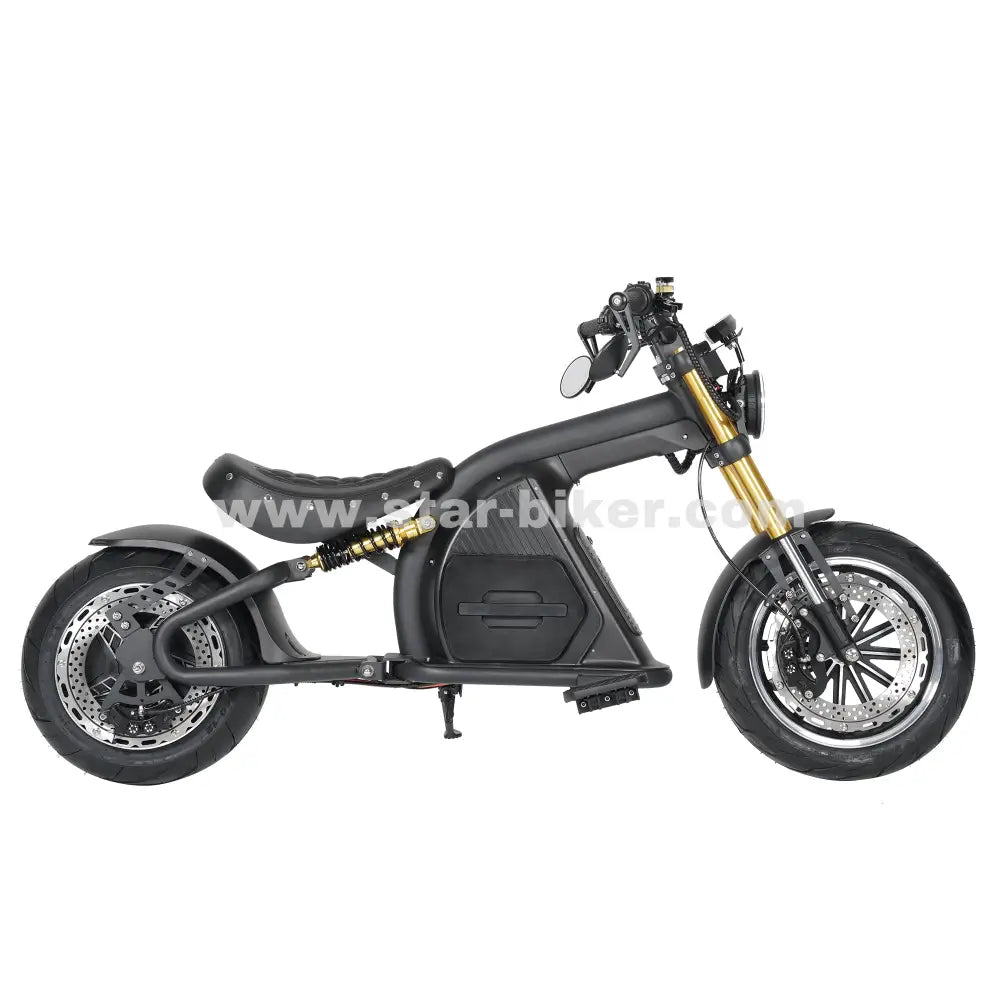
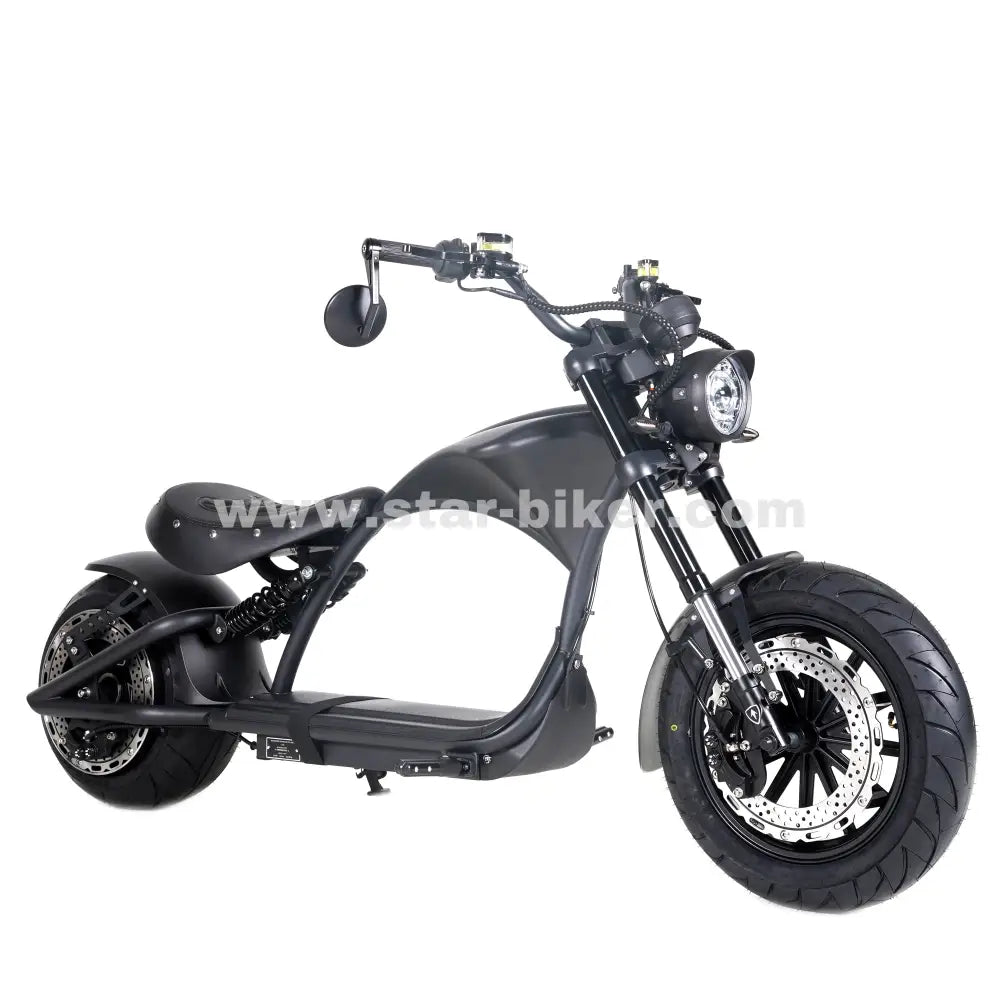
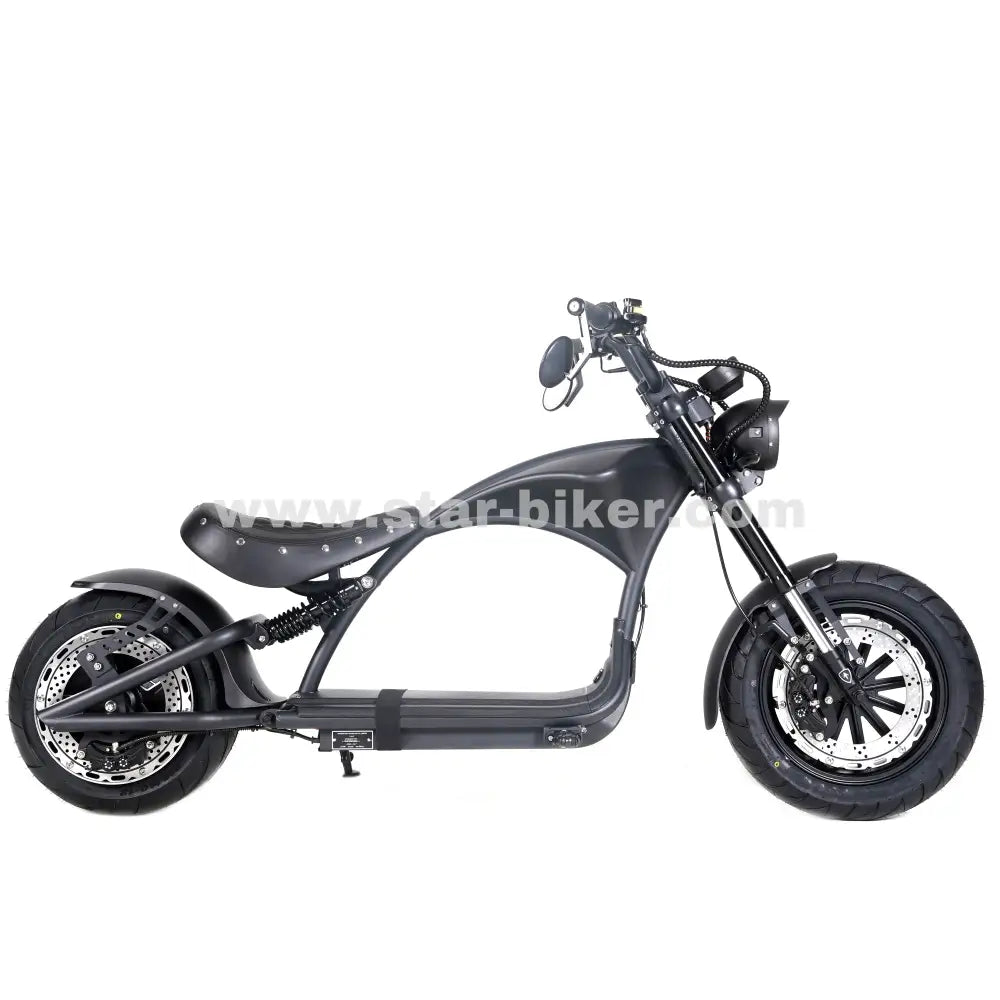
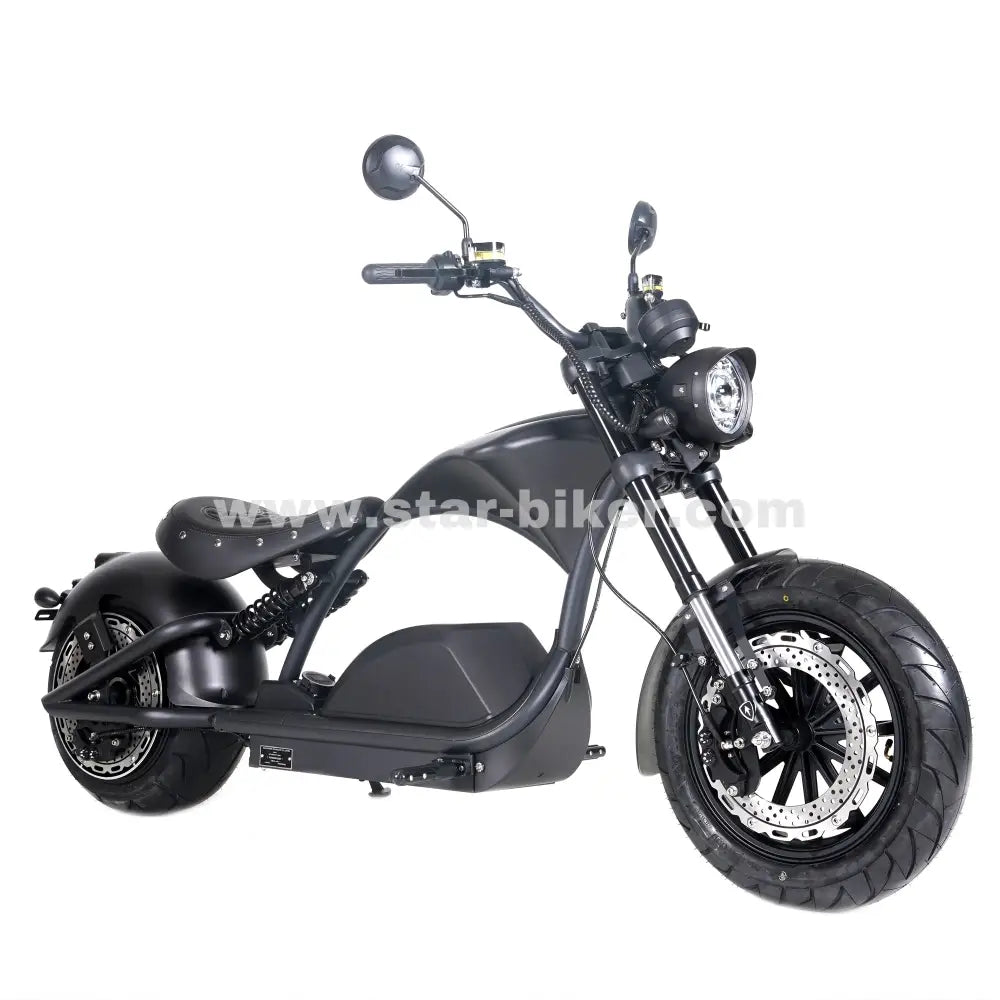
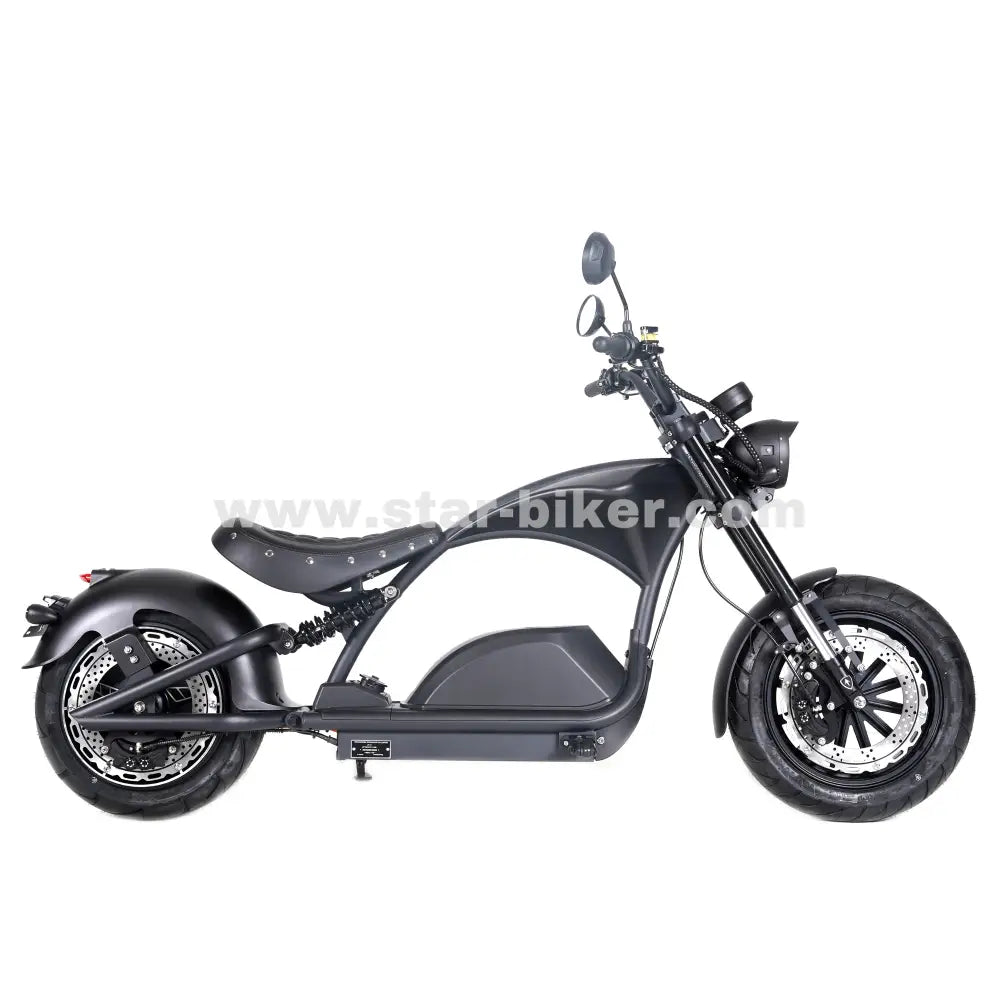
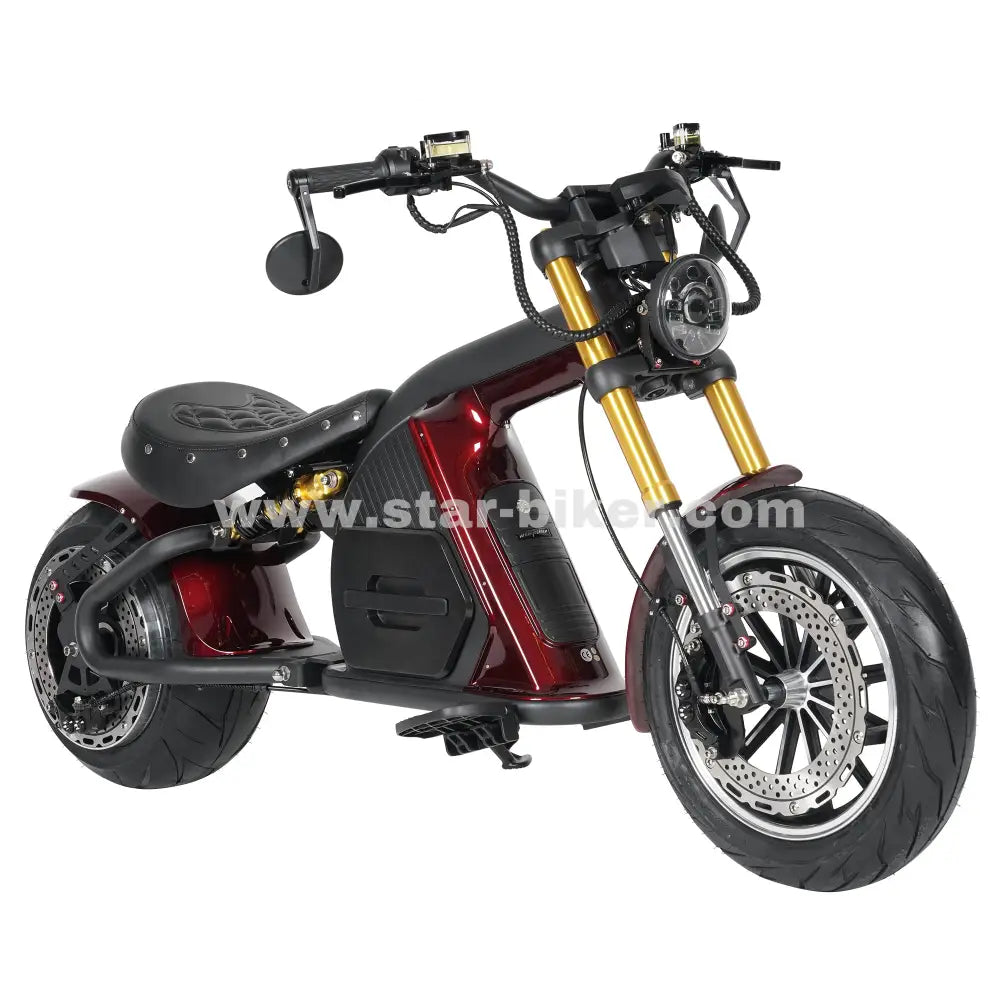
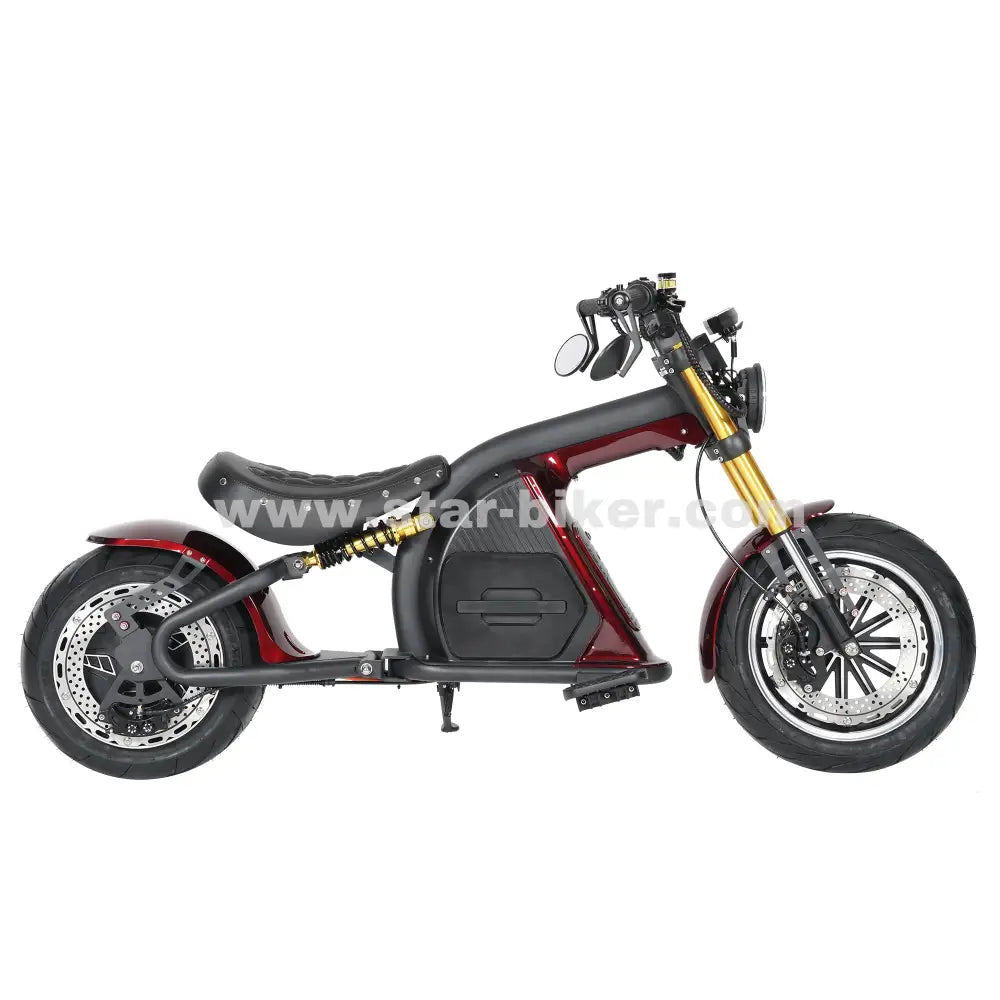
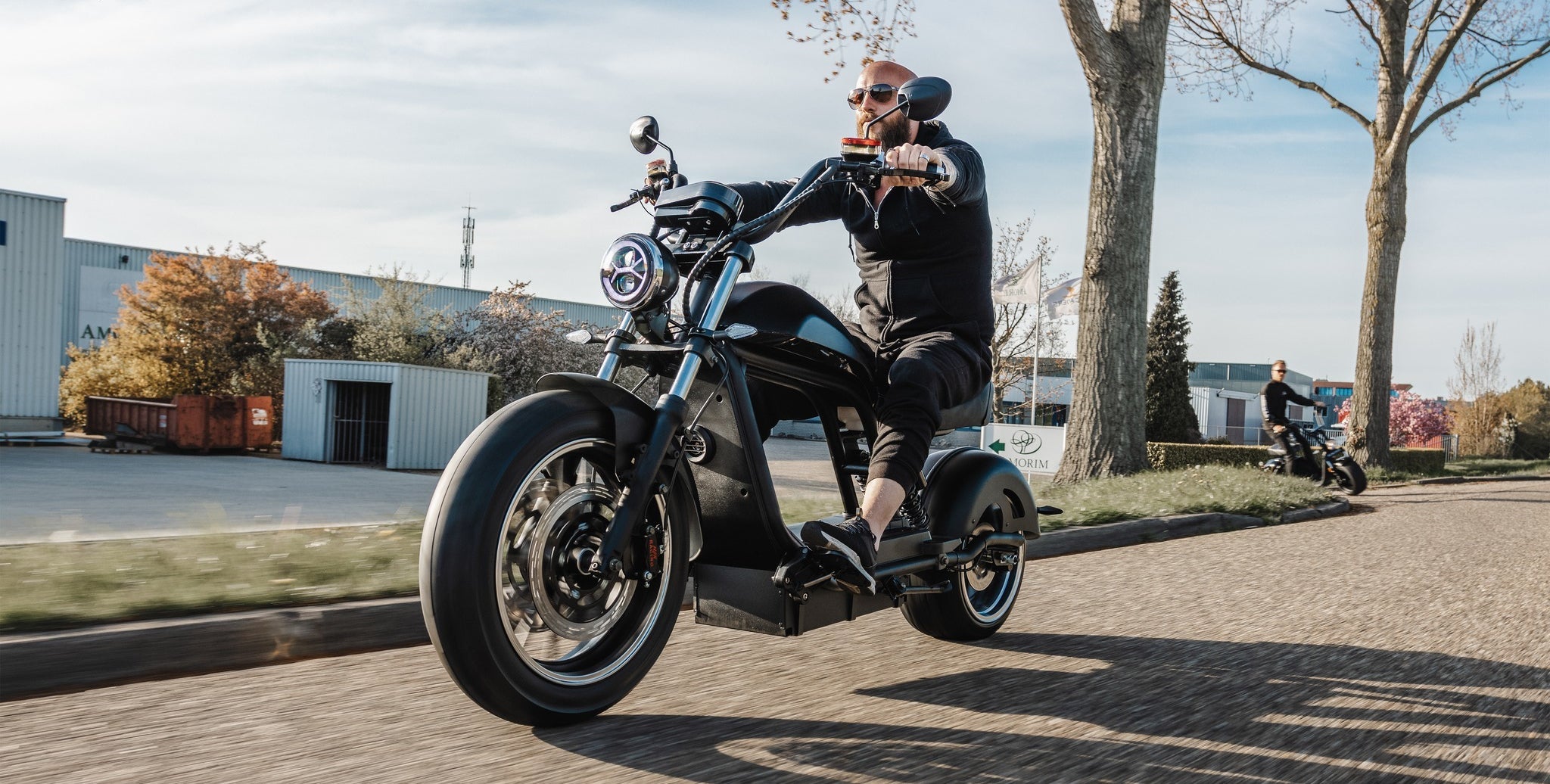
Chopper M1P Custom and Bobber M8S Custom — both fully road-legal and equipped with IP protection for everyday use.
If you drive an electric vehicle, sooner or later you'll ask yourself: Can I just hose it down? Is it allowed in the car wash? And what happens if water gets into the wrong place?
The good news: All Star-Biker vehicles — e-choppers, e-scooters, and cabin scooters — are approved for road traffic and thus designed for normal rain, puddles, and splashing water. Washing is not a problem. But there are differences between "normal hosing down" and "high-pressure cleaner directly on the motor" — and you should know them.
The Most Important at a Glance
E-choppers and electric scooters can be easily cleaned with a garden hose or in a touchless car wash. High-pressure cleaners directly on the electric motor, charging port, display, or cable connectors should be avoided. Brush car washes are generally unsuitable for two-wheelers — not because of the electronics, but because of the mechanics.
Quick Overview: What's Possible, What's Not
Before we go into detail, here are the most important points at a glance:
✓ No Problem
Garden hose with normal pressure
Touchless car wash (tire wash)
Hand wash with sponge and bucket
Microfiber cloth for cockpit & display
Rain and puddles in everyday use
Hosing down frame, fairing, rims
⚠ With Caution
High-pressure cleaner with distance > 50 cm
Washing with the motor running
Cleaners on paint — not too aggressive
Display with damp cloth — no direct spray
Hosing cable connections from the side
✕ Avoid
High-pressure directly on motor & battery
Direct spray on open charging port
Brush car wash for two-wheelers
Washing during charging process
Steam cleaner on electrical components
Solvent-based cleaners on seals
Car Wash: Which one is suitable?
Not every car wash is the same — and not every one is suitable for two-wheelers. However, this has less to do with electronics than with the mechanics of the system itself.
Touchless Gantry Car Wash — suitable
Water and foam are applied by nozzles without physical contact. No brush contact, no rotating mechanics. For e-choppers and cabin scooters, this is the best choice in a car wash — as long as the charging port is closed and no direct spray is aimed at the motor.
Brush Car Wash — not recommended
Rotating brushes are generally unsuitable for two-wheelers — regardless of whether they are electric or gasoline-powered. The brushes can damage or tear off mirrors, handlebars, indicator lenses, and fairings. Not an electrical problem, but a mechanical one.
Self-Service Wash Bay (Self-Wash Station) — best option
Self-service wash bays with foam sprayers and high-pressure lances give you full control. You choose the pressure, angle, and distance yourself. With normal pressure and 30-40 cm distance for sensitive areas: ideal. You can wash selectively without hitting delicate spots.
Cabin Scooters — Special Features
The SEVION SK3 and other cabin scooters benefit from the enclosed cabin. The interior is completely separated from the wash water. On the outside, the cabin scooter can be washed like a small vehicle — body, windows, rims without problems. Do not spray directly into ventilation slots.
Washing Correctly: Step by Step
If you want to wash your vehicle yourself, it's best to follow this order — whether it's an e-chopper, e-scooter, or cabin scooter:
1
Turn off the motor, check the charging port
Before washing, turn off the motor, close the charging port cover and check if it's tight. Never wash during charging — water and open contacts don't mix.
2
Pre-soak coarse dirt
Briefly pre-soak mud, insects, and road grime with water — then they'll loosen without mechanical pressure. Rubbing off dry dirt directly will scratch the paint.
3
Wash frame, fairing, and rims
With motorcycle shampoo or mild car shampoo and a sponge or wash mitt. Use a normal hose or a self-service wash bay with distance. Wipe in circles, don't scrub. Clean rims separately with rim cleaner.
4
Engine and battery area: with distance and from the side
Rinse the engine area and battery compartment from the side and from a distance of 40–50 cm — no direct jet, no high pressure. Water is allowed to flow over it, not to be forced into it. The IP protection class of the vehicles is designed for splash water, not for pressurized water.
5
Display and cockpit: no direct jet
Wipe the display with a damp microfiber cloth — do not spray water directly on it. Also, only wipe buttons and controls with a damp cloth, do not spray them. Completely avoid connectors and plugs.
6
Dry off and let air dry briefly
Wipe large surfaces with a microfiber cloth. Then let the vehicle air dry briefly before restarting the engine — so that residual water in cavities can drain away. Afterwards, treat the chain or drive with a suitable chain spray.
Note on high-pressure cleaners: Many people use Kärcher or similar devices — this is generally possible, but only with sufficient distance (min. 40 cm) and without a direct jet on electrical components, cables, seals, and connections. The pressure itself is less of a problem than a direct, targeted jet on unprotected areas.
Does this apply to all Star-Biker vehicles?
Yes — all Star-Biker vehicles are approved for road use and are therefore designed for splash water, rain, and normal washing. The basic rules mentioned above apply to the entire range:
E-Chopper & Bobber
Chopper M1P Custom, Bobber M8S Custom, among others
Fairing and frame can be sprayed off without problems. Display and charging port with caution — avoid direct jet.
Cabin Scooter
SEVION SK3, SEVION Cabin Scooter
Body can be washed like a small vehicle. Do not spray directly on ventilation slots and door seals. Interior remains protected.
Frequently asked questions about washing
Can I take my e-chopper to a car wash?
Touchless car washes are suitable for e-choppers, provided the charging port is closed and no direct jet is aimed at the motor or electronics. Brush car washes are unsuitable for all two-wheelers — regardless of the drive type — because rotating brushes can damage mechanical parts.
Can I use a high-pressure cleaner?
Yes, with distance. Min. 40 cm distance, no direct jet on motor, battery, charging port, display or cable connectors. Frame, fairing, rims and tires can be cleaned without problems with a high-pressure cleaner.
What happens if water gets into the electronics?
All road-legal electric vehicles are designed for splash water — this is a prerequisite for EU approval. Normal rain, puddles, and splash water during washing are not a problem. It becomes problematic if water is forced under pressure into unprotected openings — open charging ports, unprotected plugs, or seals damaged by solvent-based cleaners.
Which cleaning agent should I use?
Motorcycle shampoo or mild car shampoo for paint and fairing. Rim cleaner for the wheels. Dry microfiber cloth for display and cockpit. No solvent-based cleaners on seals, rubber parts or plastic fairings — this will damage the material.
How often should an e-vehicle be washed?
As needed — more often after driving on wet or salty roads (winter), as road salt attacks the frame. In summer, every 2–4 weeks is sufficient, depending on use. After winter, a thorough cleaning of the frame and all plug connections is recommended.
Does this also apply to the SEVION cabin scooter?
Yes, but with an advantage: The enclosed cabin fully protects the interior. The exterior body can be washed like a small vehicle — hose, foam, cloth. Do not spray directly on ventilation slots and door seals. The interior remains dry during washing.
Conclusion
Washing yes — with the right distance and some common sense.
E-choppers, e-scooters, and cabin scooters are not made of glass. They are built for road traffic — and therefore also for rain, puddles, and normal washing. Hoses, self-service car washes, and touchless car washes are not a problem. High pressure directly on electronics and open connections, however, is. Those who observe this will enjoy a clean vehicle for a long time.
My best purchase this year! I use the Star-Biker Chopper 6.0s daily for my commute. It rides great, is comfortable, and looks extremely stylish. Perfect for the city!
Luka Jovanovic
Hamburg
★★★★★
Finally independent on the road! With the Star-Biker Bobber Custom, I can finally move freely around the city without having to rely on buses or trains. Simply charge it up and go – brilliant!
Joel Zimmermann
Dusseldorf
★★★★★
Eye-catcher with power! The Star-Biker Chopper M1PS not only looks great, but also packs a punch! I'm constantly being asked about this scooter – highly recommended!
Norbert Jansen
Munich
★★★★★
Great quality and comfort! I bought the Star-Biker Chopper M1P Custom and I'm absolutely thrilled with it! Comfortable seat, good range, and perfect for city riding. I would buy it again anytime.
Sophia Wagner
Cologne
★★★★★
Ideal for the city! I've been riding the Star-Biker Chopper 6.0s for three months now – no traffic jams, no parking problems, and it's environmentally friendly, too. Perfect for everyday use!
Ali Benkacem
Frankfurt am Main
★★★★★
It's just fun! I never would have thought e-scooters could be so much fun! The Star-Biker Bobber Custom has become my daily companion—simply brilliant.
Claudia Hoffmann
Nuremberg
★★★★★
Quiet, fast and great handling! I never thought an e-scooter could be so much fun! The Star-Biker Chopper M1PS is super quiet, accelerates well, and rides very stable.
Elena Petrova
Stuttgart
★★★★★
Environmentally friendly & practical! I wanted a sustainable alternative to a car, and I'm absolutely satisfied with the Star-Biker Chopper 6.0s. Excellent workmanship and amazing ride comfort!
Nicolas Dubois
Berlin
★★★★★
Perfect for my commute! The Star-Biker Chopper 6.0s is exactly what I was looking for. No more traffic jams, no more searching for a parking space – just charge up and go. Plus, it's a great ride!
Mustafa Demir
Dortmund
Do you have a question for us?
Use our contact form – we’ll help you quickly and easily!
Washing E-Choppers: Car Wash, Hosing Down & Care | Star-Biker