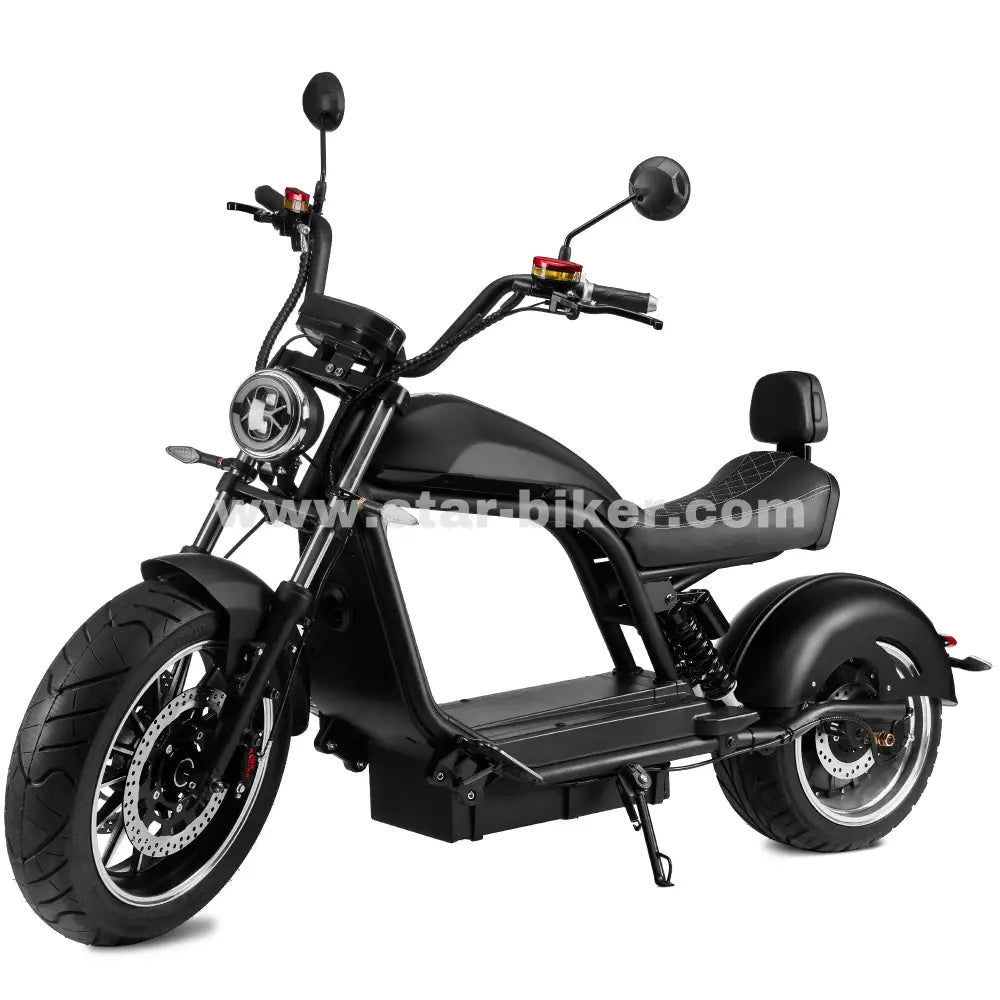
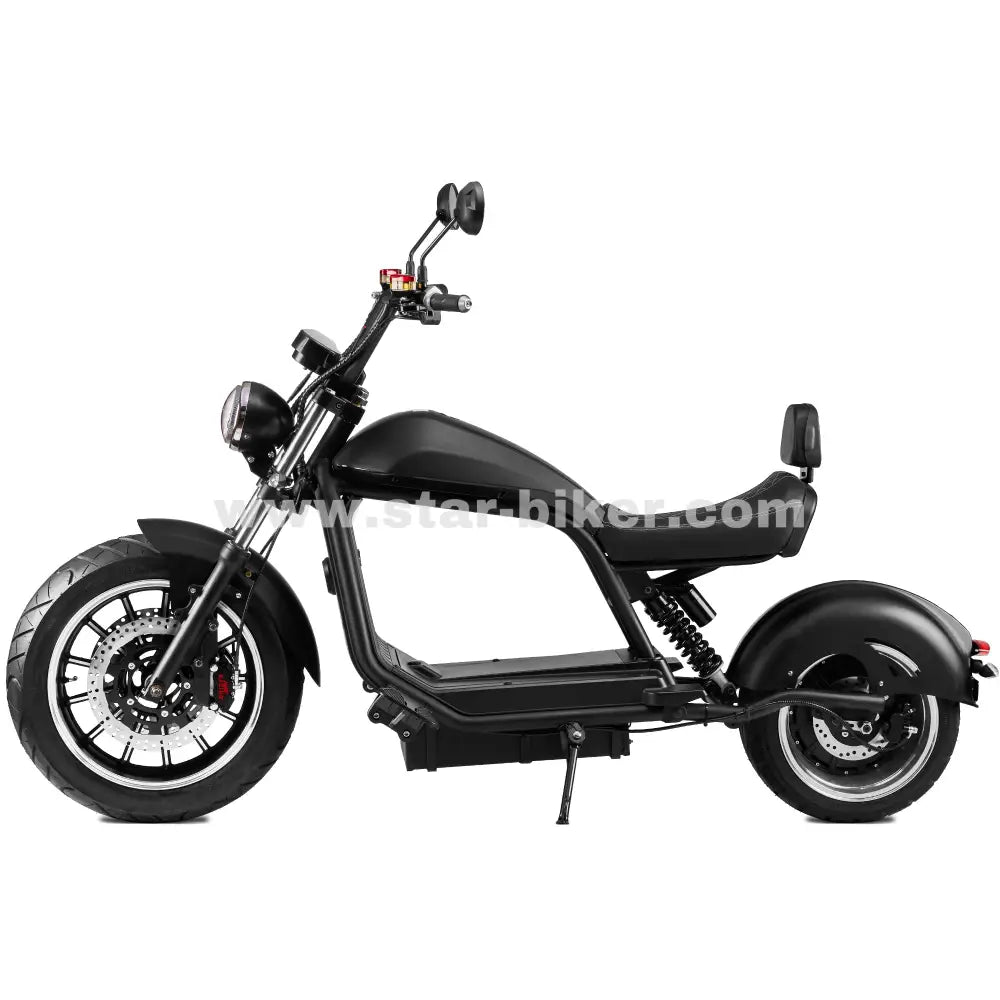
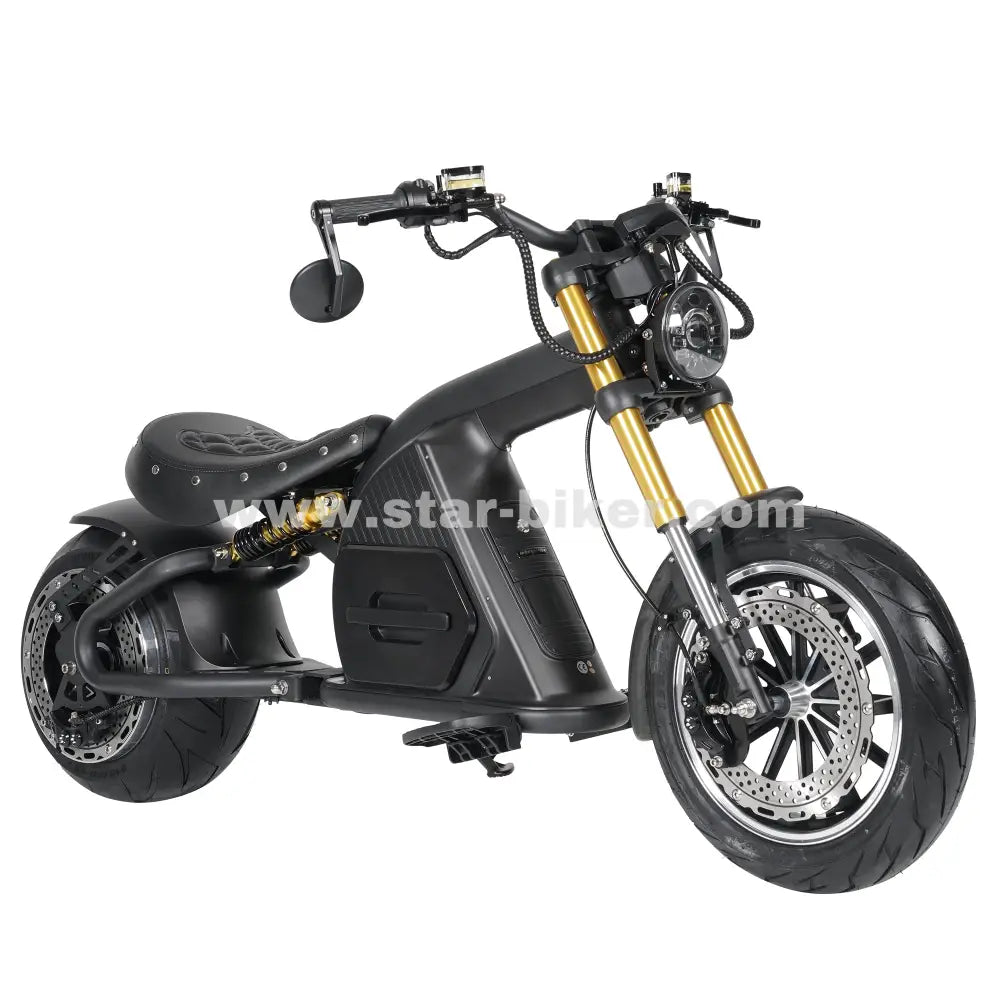
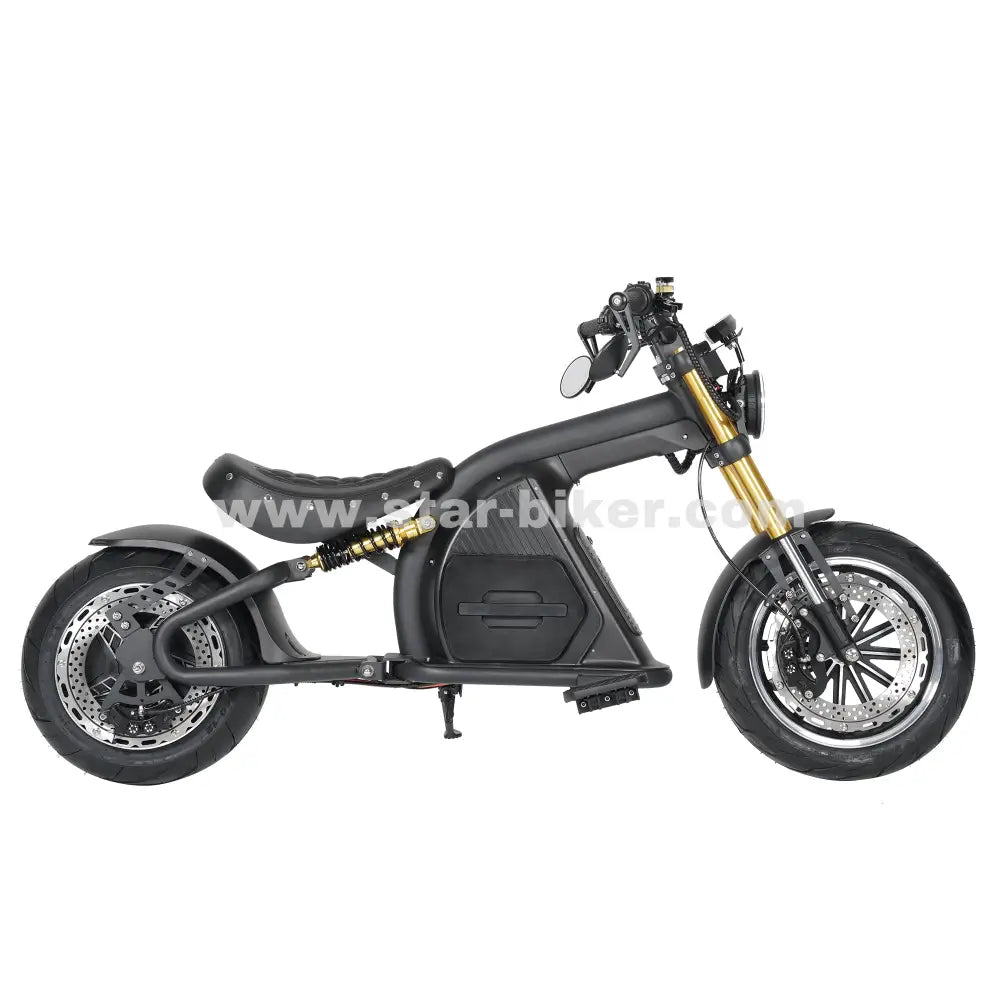
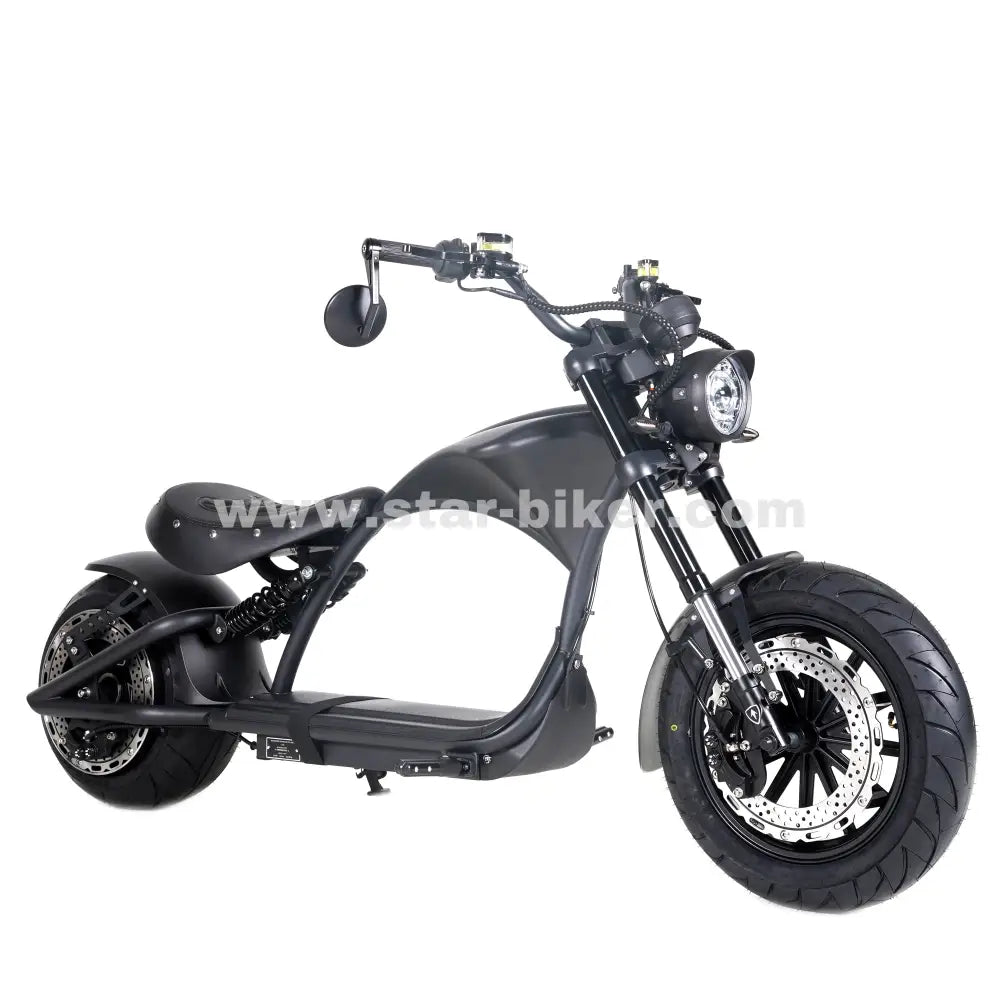
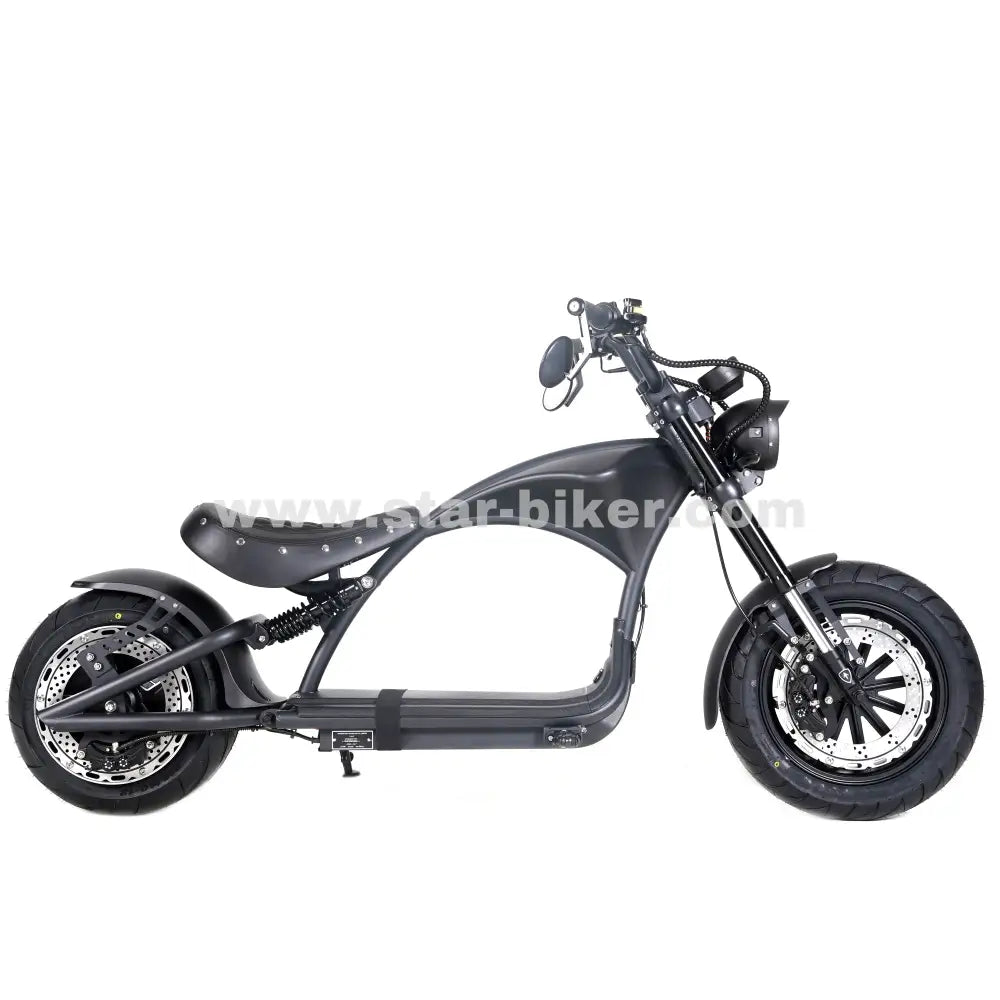
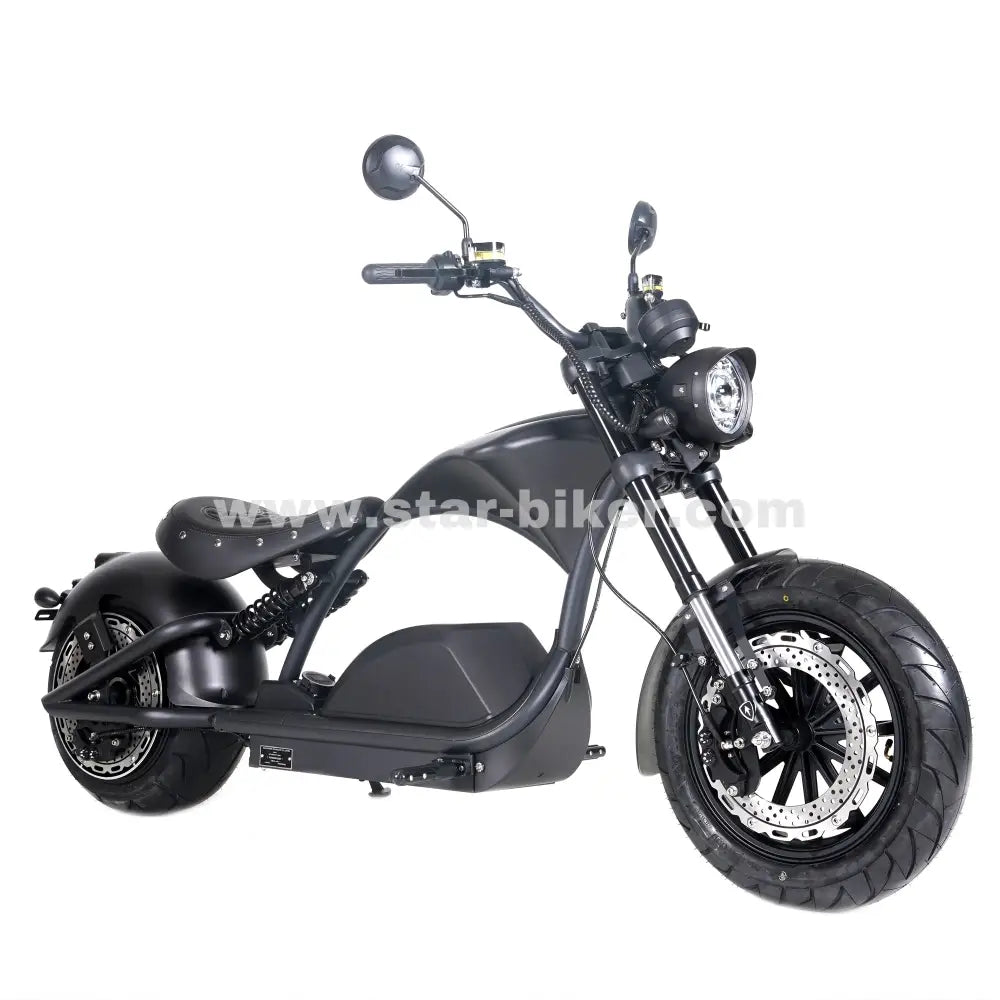
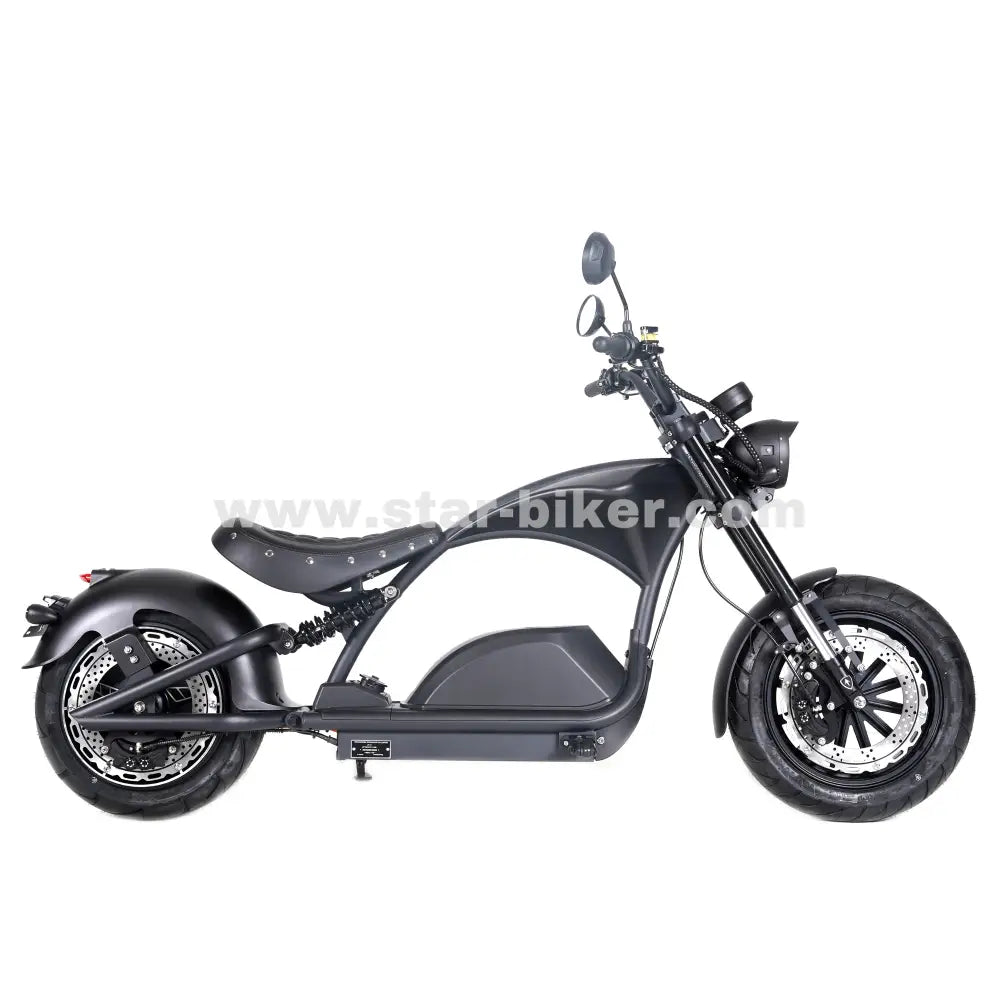
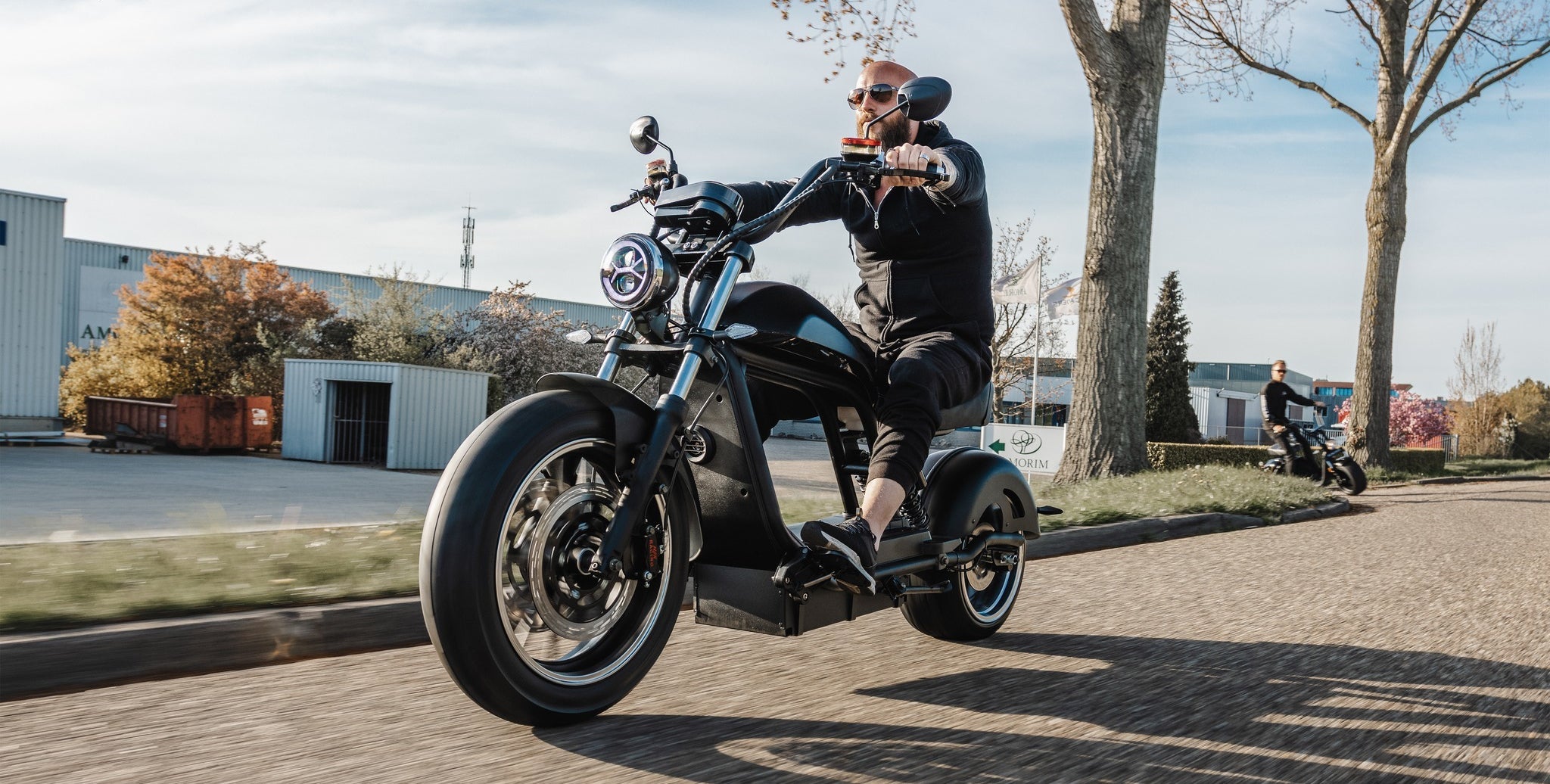
Riding E-Choppers & E-Scooters in Winter and Rain – Safety, Battery & Maintenance

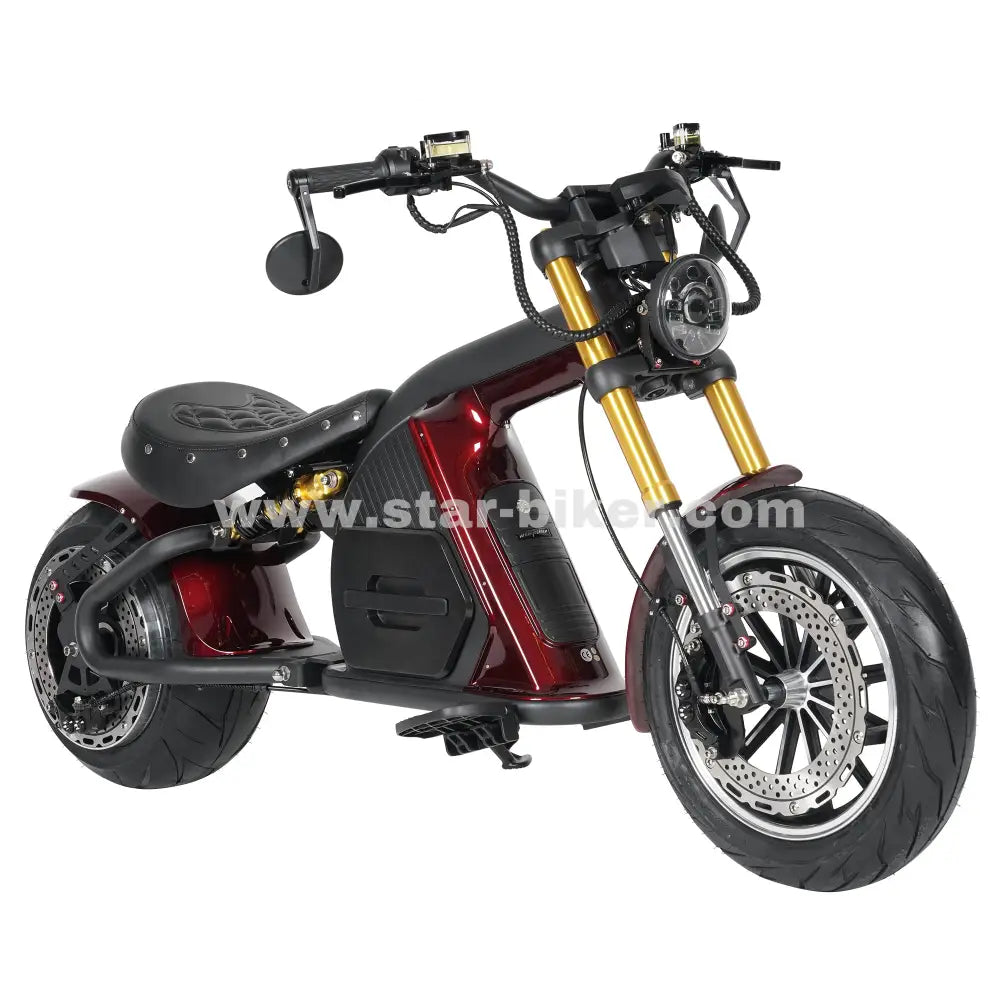
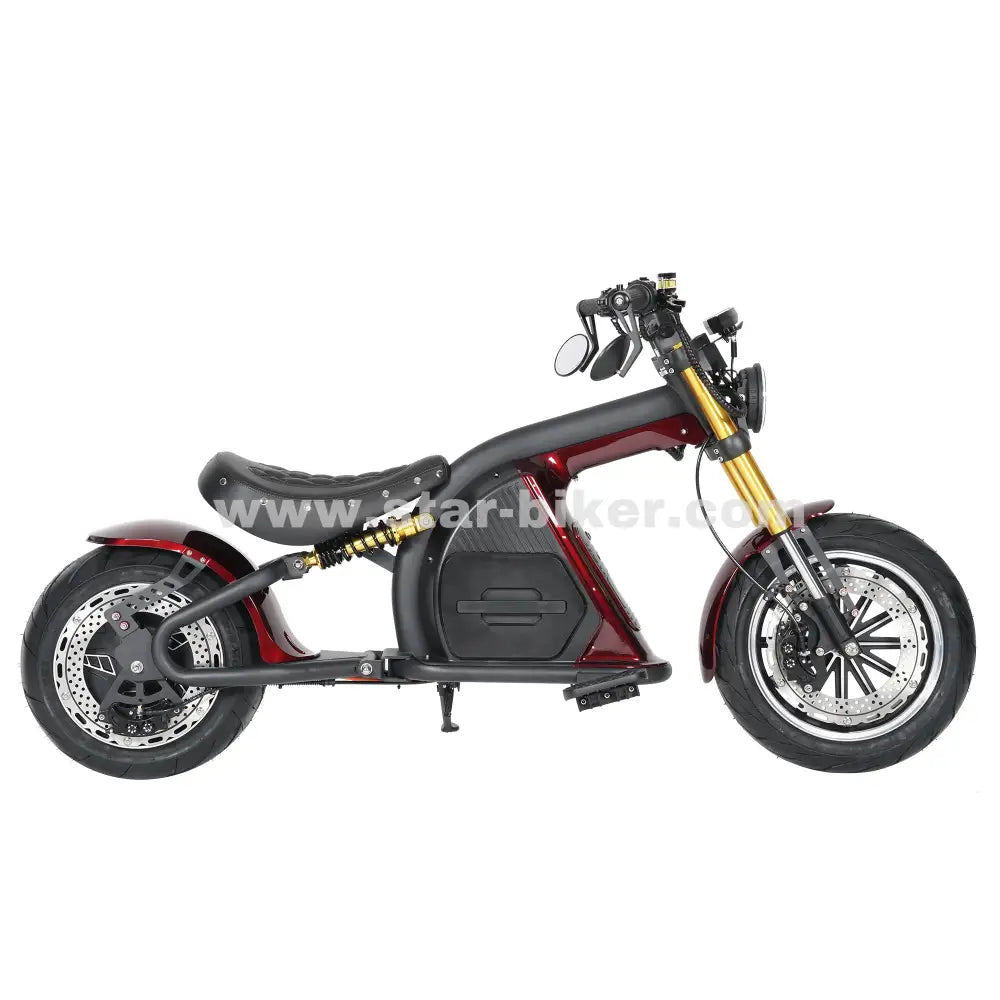
Technical Guide for safety, value retention, and system protection in all-season operation (as of 2026). Modern Star-Biker vehicles are built for everyday use – however, tires, brakes, battery handling, corrosion protection, and proper care after rain/salt are crucial.
Quick Overview
- Rain: longer braking distances, reduced visibility, protect connectors.
- Snow/Ice: traction extremely reduced – winter tires/all-weather tires and defensive driving.
- Salt: accelerates corrosion – underbody care is mandatory.
- Battery in cold: range decreases (typically 10–20%), charge only when cell temperature is sufficiently warm.
1) All-Season Mobility: Technology Instead of Myth
E-choppers and e-scooters are no longer just "fair-weather vehicles." Thanks to encapsulated control units, brushless motors, high-quality Li-Ion cells, and modern BMS protection functions, many models are suitable for all-season use – if you adapt your maintenance and driving style.
| Advantage | Why relevant in cold/wet conditions | Practical Tip |
|---|---|---|
| Brushless Motor | Fewer mechanical parts → less susceptible to corrosion/blockages. | Clean after driving in salt, keep connector areas dry. |
| Electronic Motor Brake | Finer deceleration possible → more stable than "hard" rear braking. | Brake cautiously and anticipate in wet conditions – no late braking. |
| Encapsulated Electronics | Protects controller/BMS – connectors are a weak point. | Check contacts, close sealing caps, no high-pressure directly on cables. |
2) Safety in Rain: Braking Distance, Friction, and Driving Dynamics
On wet roads, grip significantly decreases. This directly affects braking distance. The most important rule is: more distance, brake earlier, steer more gently.
| Condition | Typical Friction Coefficient (μ) | Meaning for you |
|---|---|---|
| Dry Asphalt | 0.7 – 0.8 | Short braking distances, stable turns. |
| Wet Asphalt | < 0.4 | Significantly longer braking distances, reduce lean angle. |
| Snow / Slush | < 0.2 | Maximum caution, possibly avoid driving. |
| Ice | < 0.1 | Extremely slippery – do not drive if possible. |
Rain Checklist (Driving)
- Test brakes (briefly and gently) after the first few meters.
- Corners: less lean angle, steady throttle.
- Distance: at least +50% compared to dry driving.
- Puddles: avoid deep water (risk for bearings/connectors).
3) Tire Pressure, Tread Depth & Aquaplaning
Aquaplaning occurs when the tire tread can no longer displace water quickly enough. Wide tires look good, but require correct tire pressure, otherwise drainage channels close up.
| Component | Why important | Recommendation |
|---|---|---|
| Tire Pressure | Too little pressure → tread "collapses" → poor water displacement. | Check pressure once a week, adjust to load. |
| Tread Depth | Water displacement decreases – especially critical at the front. | Check regularly, replace early. |
| Driving Style | Aggressive steering/braking impulses lead to faster loss of grip. | Smooth lines, no abrupt changes in direction. |
4) Winter & Snow: Traction, Stability and Tire Choice
Snow and ice drastically reduce traction. For two-wheelers: winter tires/all-weather tires with silica compound help, but do not replace defensive driving. E-trikes and cabin scooters offer additional stability due to multiple tracks.
| Vehicle Type | Winter Strength | Recommendation |
|---|---|---|
| Two-wheeler (E-Chopper/E-Scooter) | Limited on snow/ice (risk of tipping & skidding). | Winter tires/all-weather, drive very defensively. |
| E-Trike | More stability due to multiple tracks. | Check tires & brakes especially, still be careful. |
| Cabin Scooter | Maximum weather resistance (weather protection, heating possible). | Most comfortable solution for commuters in winter. |
5) Salt & Corrosion: Underbody Care is Mandatory
Salt acts as an electrolyte and accelerates corrosion – especially at screw connections, brackets, and unprotected metal surfaces. Anyone who drives in winter should follow a clear care protocol.
| Action | Goal | How to do it |
|---|---|---|
| Rinse Underbody | Remove salt, slow down corrosion. | With cold water, gently, no high-pressure on connectors. |
| Corrosion Protection | Protective film against moisture/salt. | Protective wax/oil (e.g., Fluid Film) according to manufacturer's instructions. |
| Visual Inspection | Detect damage early. | Check screws, brackets, brake lines, connector areas. |
6) Battery in Cold: Range, Performance, and Charging
In cold weather, the usable range decreases because the chemical processes in the battery become slower. This is normal. How you start, store, and charge is crucial.
| Temperature | Typical Range Loss | What you should do |
|---|---|---|
| ~ 0 °C | approx. 20–25% | Start battery warm (indoor storage), accelerate gently. |
| ~ -10 °C | up to ~40% | Plan trips, build in reserve, extend charging times. |
Battery Protection (Winter Rules)
- Never charge "ice cold": only charge when the battery is above approx. 5 °C again.
- Start warm: store battery indoors if possible.
- Accelerate gently: no full throttle acceleration for the first few minutes.
- Never leave outside below 20% SOC: cold temperatures additionally lower the voltage.
7) Electronics & Moisture: Controller, Connectors, Cockpit
Electronics are usually protected – the "critical points" are connectors, cable glands, and open ports (USB/12V/5V). With a few simple steps, you can drastically reduce failures.
| Component | Typical Risk | Protective Measure |
|---|---|---|
| Plug Contacts | Moisture → oxidation, creeping currents. | Dielectric grease / contact protection, check seals. |
| TFT/USB Ports | Water in ports → short circuit risk. | Always close covers, use only splash-proof. |
| Cleaning | High pressure can overwhelm seals. | Clean gently, no direct jet on bearings/connectors. |
8) Which Class in Bad Weather?
The higher the speed, the higher the demands on tires, distance, and braking technique.
| Class | Advantage | Note for Rain/Snow |
|---|---|---|
| 25 km/h | Low kinetic energy, easily controllable. | Most relaxed for short distances in bad weather. |
| 45 km/h | Everyday speed, good balance of range & drivability. | Distance, tires, and brake check are crucial. |
| 85 km/h | Fast, powerful – for experienced riders. | In winter only with top tires & professional driving style. |
9) Care After Rain or Snow: Value Retention Protocol
Regularly using your vehicle in rain/salt can strongly influence its resale value – both positively and negatively. With a simple protocol, technology and appearance remain in top condition permanently.
| After the Ride | Why | Quickly Done |
|---|---|---|
| Dry | Prevents water spots & moisture in critical areas. | Microfiber cloth for seat, display, controls. |
| Rinse off salt | Corrosion protection. | Underbody & splash areas gently with cold water. |
| Check Brakes | Dirt/moisture can make brake pistons stiff. | Check pads, clean discs with brake cleaner if necessary. |
10) Optional: Charging with a Balcony Power Plant (800W)
Those who charge at home can cover a large part of their driving energy with a balcony power plant – especially for regular short distances. This improves economic efficiency and reduces running costs.
FAQ – Frequently Asked Questions
| Question | Answer (short & technical) |
|---|---|
| Can you ride an e-chopper in the rain? | Yes, it's splash-proof. Avoid deep puddles and high-pressure cleaning. |
| Is an electric scooter waterproof? | Weatherproof according to IP standard, but not suitable for submersion. |
| How much range does a battery lose in winter? | Typically 10–20% at 0 °C, up to ~30% at -10 °C (depending on riding style/load). |
| Can you ride at 45 km/h in snow? | Yes, legally possible – but only advisable in certain situations (tires, road conditions, experience). |
| How do you protect controllers/connectors from moisture? | Check plug areas, close sealing caps, use contact protection, avoid direct water jets. |
| Do I need to clean after rain/salt? | Absolutely after riding in salt. Recommended after rain to keep dirt out of brakes/bearings. |
Conclusion
Rain and winter are not deal-breakers for e-choppers and e-scooters – but they demand discipline: keep an eye on tires & brakes, treat the battery correctly, remove salt, and protect electronics. Anyone who follows the protocol will ride safer, save on repairs, and maintain the vehicle's value in the long term.
Note: This article is a technical guide and does not replace individual maintenance/service advice. In case of uncertainty, we recommend an inspection by a specialist workshop/service partner.